Finance · Daily New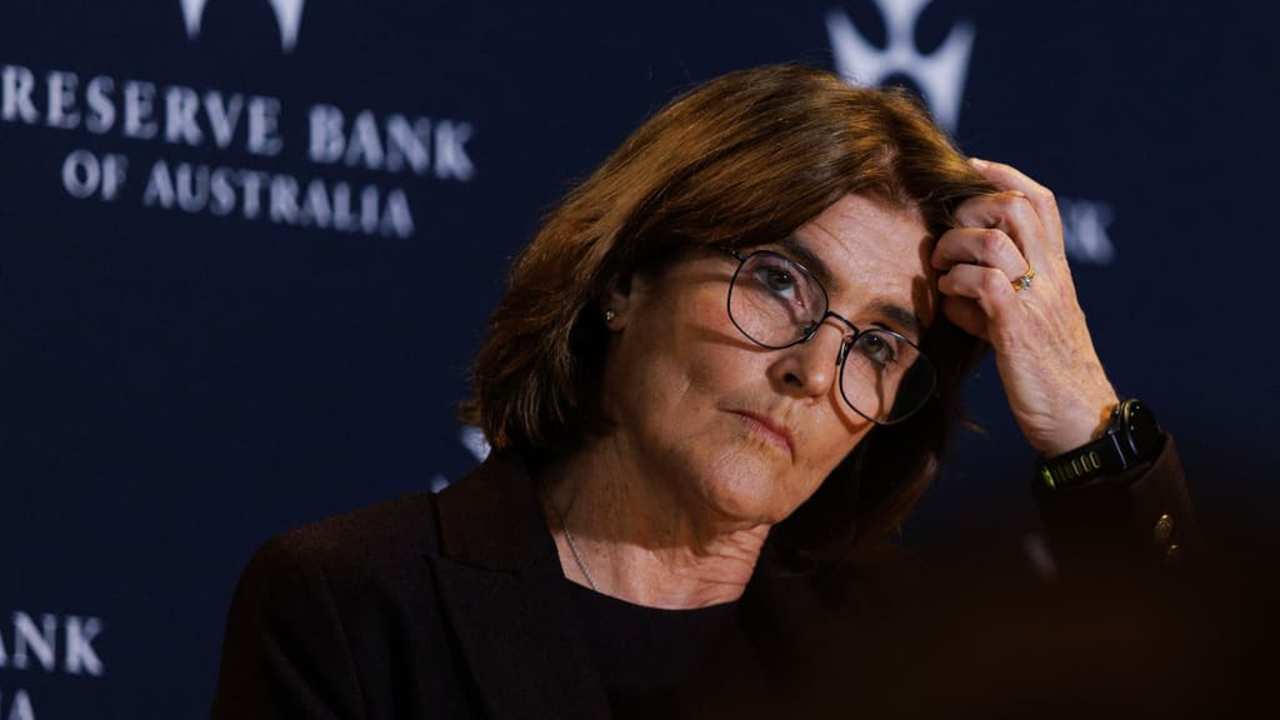
Reserve Bank Governor Michele Bullock addresses the media following the announcement that the RBA will increase interest rates to 4.6 per cent. Picture: NewsWire / Nikki Short Shock unsealed Reserve Bank minutes show board members are willing to accept job losses to crush inflation – exposing a stark gap with the Governor’s softer warnings as low rates disappear. Unsealed records from the RBA’s late September meeting – where the cash rate was unanimously hiked to 4.60 per cent – show a board prepared to inflict severe financial pain on households exposing the stern reality agreed to behind closed doors.
Major banks are warning that the RBA board is more “hawkish” than they may think, meaning they have a strong willingness to raise rates now to cut inflation even if it means job losses. Source: Asanka Ratnayake/Getty Images. While the Governor publicly expressed “hope” that previous rate hikes would be enough, Commonwealth Bank head of Australian economics Belinda Allen flagged the unsealed minutes telling a completely different story.
“Quite surprisingly, there was no mention of the lags to monetary policy, which was a key point made by the Governor as a reason to be more patient,” Ms Allen said. By omitting any mention of policy lags, the minutes confirm the RBA monetary policy board voted unanimously to abandon patience, prioritising taming prices over preserving jobs or home values. Senior economists at Australia’s major banks warn the unsealed minutes leave the door wide open for another interest rate shock before the end of the year.
Ms Allen labelled the internal records “decisively hawkish” – signalling a strong willingness to raise interest rates or keep them high if necessary. “The Minutes were a clear contrast to the messaging by the Governor in her unscripted answers in the press conference,” Ms Allen said. “A hawkish statement shifted to a dovish press conference where a focus on the lags of monetary policy and the four rate hikes to date were ‘hoped’ to be enough shifted the message.” CBA head of Australian economics Belinda Allen She warned the lower hurdle for further tightening makes a November hike a “clear risk”.
“We still see the cash rate on hold from here but acknowledge the clear risk is another rate hike from here with November very much live,” Ms Allen said. Among those forecasting rates will hike in November is ANZ head of Australian economics Adam Boyton, who declared 4.85 per cent is now “more likely than not”. given the RBA now has a “very high tolerance” for economic weakness. “Overall, we read these minutes as more consistent with the hawkish tone to the post-meeting statement and less so some of the more dovish elements of the September press conference,” Mr Boyton said.
This as fresh market data from Canstar shows lenders already pricing in the threat of further rate increases, officially wiping out low fixed rates starting with a ‘5’. Canstar data insights director Sally Tindall said “we’ve officially had to say goodbye to fixed rates starting with a ‘5’ this week, with the lowest fixed rates jumping up above the 6.00 per cent mark”. ANZ head of Australian economics Adam Boyton “Canstar data shows 21 lenders hiked at least one fixed rate last week – a troubling sign considering banks tend to move fixed rates ahead of an RBA hike, not after.” Canstar shows 52 lenders have now passed on the September RBA hike to borrowers, with 40 lenders increasing 375 variable rates over the past week alone – pushing the average owner-occupier variable rate to a staggering 6.49 per cent.
But Ms Tindall warned “there will be plenty of borrowers paying a rate over 7.00 per cent, with the possibility of another RBA increase waiting in the wings”. “It’s difficult medicine to swallow for borrowers on behalf of a high inflation nation.” Owner occupiers with a $600,000 home loan would have had their minimum monthly repayment rise by $91 off the September hike, bringing the cumulative increase across the four 2026 rate hikes to $364 a month. If the RBA delivers a fifth rate hike in November, repayments will jump by another $92, taking the total 2026 repayment surge to $456 a month more than they were paying in January.
Canstar data insights director Sally Tindall Borrowers holding a $750,000 mortgage saw their monthly bill increase by $114 following the September hike, compounding a total rise of $454 across the year’s four rate increases. A projected November rate hike would add a further $115 to monthly costs, dragging total extra repayments up to $570 a month. On a $1 million loan, the September rate rise added $152 a month, bringing the total cost increase across all four 2026 hikes to $606 monthly – with any additional rate hike in November to slap on another $153 hit, pushing the total 2026 repayment surge to $759 a month.
Source: Real Estate